


Uganda’s Longtime President Seeks Another Term as Succession Questions Loom
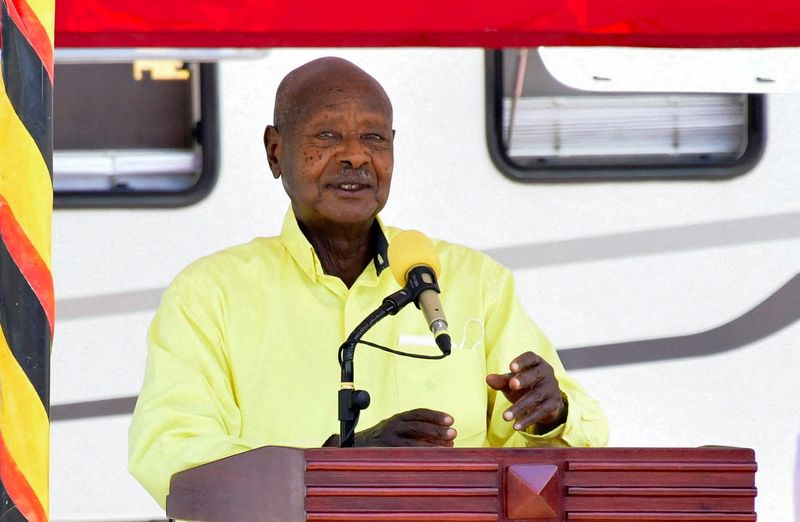
Ugandan President Yoweri Museveni is expected to secure another term in office in Thursday’s election, extending his rule of more than four decades, following a campaign marked by violence and overshadowed by growing debate over who may eventually succeed him.
Museveni, a former rebel leader who came to power after overthrowing the previous government in 1986, is now 81 years old and is contesting the presidency against seven challengers. He has said that winning a seventh term and remaining in power for another four years would allow him to “protect the gains” achieved during a period he describes as one of relative peace and stability.
Among his challengers, the most prominent is 43-year-old musician-turned-politician Bobi Wine, who secured 35% of the vote in the 2021 election. Wine has galvanized younger voters frustrated by high unemployment, corruption and economic inequality.
Museveni has twice amended the constitution to remove both presidential term limits and age restrictions, consolidating his grip on power. Analysts say his firm control over state institutions leaves little chance of an electoral upset in the East African nation of roughly 46 million people.
Nevertheless, the election — and any unrest surrounding it — represents an important test of Museveni’s authority, coming four years after the United States condemned the previous vote as neither free nor fair.
Uganda plays a significant strategic role in the region, deploying troops to Somalia, South Sudan, the Democratic Republic of Congo and Equatorial Guinea for peacekeeping, counterinsurgency and military cooperation operations.
The country’s economy, long dependent on coffee exports, tourism and agro-processing, is expected to accelerate sharply once crude oil production begins later this year. The oil fields are operated by France’s TotalEnergies and China’s CNOOC, with growth projections reaching double digits once output ramps up.
Growing Speculation Over Succession
Museveni is widely believed to favor his son, Muhoozi Kainerugaba — the current military chief — as his eventual successor, although the president has repeatedly denied grooming him for the role.
Kainerugaba, an outspoken and controversial figure on social media, has frequently posted aggressive messages and threats directed at opposition figures. He has openly expressed his ambition to take over the presidency.
However, his presumed status as heir apparent is not universally accepted within the ruling National Resistance Movement. Analysts say other senior party figures are also positioning themselves for a post-Museveni political landscape.
As in past elections, campaigning has been marred by violence. Security forces have repeatedly used tear gas and live ammunition at Bobi Wine’s rallies, resulting in at least one death and the arrest of hundreds of supporters.
Authorities have defended the actions of security forces, arguing they were responding to disorderly and unlawful behavior by opposition groups.
Concerns over instability have intensified following violent unrest during Tanzania’s elections in October, in which the United Nations estimates that hundreds of people were killed. Deadly anti-government protests in neighboring Kenya over the past two years have added to regional anxiety.
“The possibility of a spillover effect in Uganda, influenced by developments in its two neighbors, cannot be ruled out,” said Kampala-based political analyst Timothy Kalyegira.
Wine Channels Youth Discontent
The presidential election will take place alongside parliamentary voting. If no candidate wins an outright majority, a runoff will be held within a month.
Despite persistent criticism of his human rights record, Museveni has retained support from Western governments by contributing troops to regional security missions and hosting millions of refugees.
More recently, he has sought to strengthen ties with U.S. President Donald Trump by agreeing to accept deportees from the United States who are nationals of third countries.
Some Ugandans credit Museveni with fostering economic opportunity. Sarah Rusoke, a 26-year-old who runs a vehicle-washing business, said the president helped create “an economy that allows us to start businesses and … create our own footprints.”
Bobi Wine, whose real name is Robert Kyagulanyi, has capitalized on frustration among young people in a country where more than 70% of the population is under the age of 30. He has described the vote as a “protest election” against what he calls Museveni’s “dictatorship” and has promised a sweeping crackdown on corruption if elected.
“I am inspired by his courage,” said Simon Walusimbi, a 21-year-old mechanic, referring to Wine. “He has endured all the persecution the government has thrown at him.”