


Canadian Prime Minister Visits China After Nearly a Decade of Strained Relations
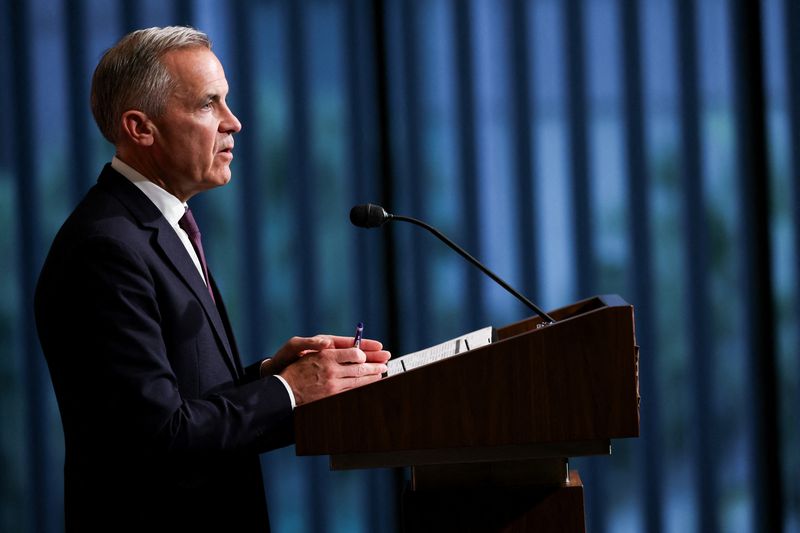
Canada’s Prime Minister Mark Carney is set to depart for China on Tuesday, where he is expected to hold talks on trade and international security at a time when Canada’s relationship with the United States has become increasingly uncertain. Ottawa is facing heightened tensions stemming from a trade war and annexation threats voiced by U.S. President Donald Trump.
The visit marks the first trip to Beijing by a Canadian prime minister since 2017 and could signal a significant shift in bilateral relations as Canada looks to diversify its trade and security partnerships.
Carney agreed to travel to China last October following a meeting with Chinese President Xi Jinping in South Korea. While that encounter did not produce immediate breakthroughs, it suggested potential for closer engagement after years of strained relations under former Prime Minister Justin Trudeau. Ties deteriorated sharply in 2018 after Canada detained the chief financial officer of Chinese technology firm Huawei.
This time, observers expect concrete outcomes, or at least commitments toward future agreements. Senior Canadian officials said Carney is expected to sign several memoranda of understanding that are still being finalized.
Greg MacEachern, a former senior adviser to a Liberal cabinet minister, said he expects the visit to deliver more than symbolic gestures.
“When a Canadian prime minister is invited to China, it is not simply for show,” he said, adding that the trip would be closely watched in Washington.
“There is a political risk that this could irritate President Trump, but Prime Minister Carney is clearly signaling that Canada is open for business. The government has decided that this risk is worth taking.”
Crude Oil and Canola Take Center Stage
Among the possible outcomes are increased exports of Canadian crude oil to China, according to a source familiar with the discussions.
Canada currently sends roughly 90% of its oil exports to the United States, but a planned increase in U.S. oil imports from Venezuela could reduce American demand for Canadian crude.
Senior Canadian officials said they anticipate progress during the visit, though not the immediate removal of Chinese tariffs on Canadian canola exports.
China’s foreign ministry said it looks forward to strengthening mutual trust during Carney’s visit, scheduled for January 14–17.
“Both Canada and China want to demonstrate goodwill, which means each side will need to make some concessions,” said Lynette Ong, a professor of Chinese politics at the University of Toronto.
China imposed preliminary anti-dumping duties on Canadian canola imports in August, escalating a trade dispute that began after Ottawa introduced tariffs on Chinese electric vehicle imports a year earlier. Those measures have effectively halted canola exports to China, which had previously been Canada’s largest export market for the crop.
Ong noted that the electric vehicle tariffs were introduced during the administration of former U.S. President Joe Biden. Given the recent deterioration in Canada’s relationship with the United States, she argued that maintaining strict alignment with Washington has become less critical for Ottawa. China remains Canada’s second-largest trading partner after the United States.
Doug Ford, premier of Ontario—Canada’s most populous province and a key automotive manufacturing hub—urged Carney not to ease pressure on Beijing. He said the electric vehicle tariffs should only be lifted if China commits to opening a manufacturing facility in Ontario.
Colin Hornby, head of the Manitoba-based farm group Keystone Agricultural Producers, said he does not expect the canola tariffs to be lifted during the visit, but expressed optimism that progress could be made in the weeks or months ahead.
National Security and Human Rights Concerns
Vina Nadjibulla, vice-president of the Asia Pacific Foundation of Canada, cautioned that expanded cooperation with China in areas such as artificial intelligence and critical minerals could pose risks to Canadian national security.
“There are clear red lines that should not be crossed,” she said.
Canada has previously raised concerns about human rights issues in China, including the imprisonment of pro-democracy media figure Jimmy Lai, the secret execution of four Canadians last year, and past allegations of interference in Canadian elections.
Cheuk Kwan, co-chair of the Toronto Association for Democracy in China, said he hopes Canada will “not fall into the trap of appeasing China simply to secure bilateral trade deals.”
Two Canadian members of parliament said on Monday that they were cutting short a visit to democratically governed Taiwan—claimed by China as its own territory—ahead of Carney’s China trip, in order to avoid confusion over Canada’s foreign policy stance.
China’s decision to host Carney at Beijing’s Great Hall of the People, one of the country’s most prominent government venues, may form part of a broader diplomatic charm offensive, according to Joseph Torigian, an expert on Chinese politics at American University.
Torigian suggested that Beijing may be seeking to improve its global image following the recent U.S. seizure of Venezuelan President Nicolás Maduro.
“China may use its meetings with Canada to argue that the United States is an unreliable and potentially dangerous partner,” Torigian said. “By contrast, Beijing may present itself as willing to help Canada expand its trade relationships beyond its immediate region—provided Canada is willing to engage on China’s terms.”