


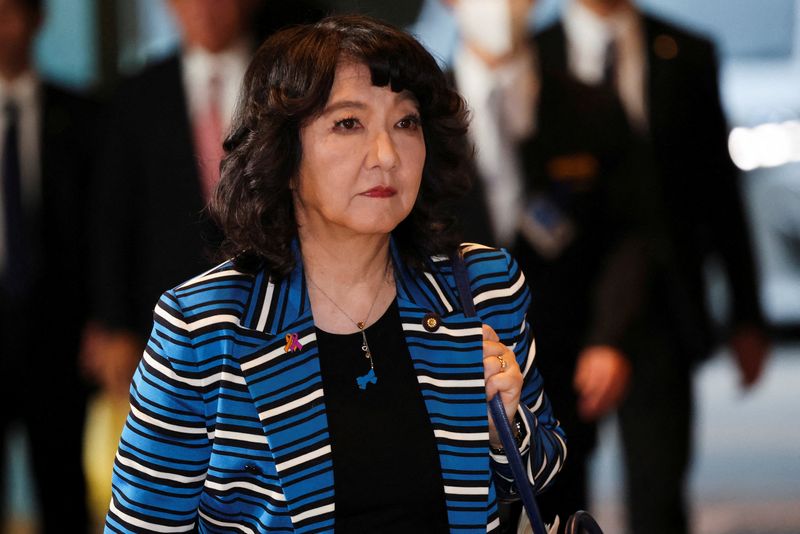
Japan Finance Minister Says U.S. Treasury’s Bessent Shares Concerns Over Weak Yen
Japan’s Finance Minister Satsuki Katayama said she and U.S. Treasury Secretary Scott Bessent share concerns over what she described as the yen’s recent “one-sided depreciation,” as Tokyo stepped up warnings of possible intervention to curb the currency’s decline.
Katayama’s remarks highlight growing unease in Japan over the yen’s slide, which crossed the psychologically important level of 158 yen per dollar for the first time in about a year. The move followed reports that Japanese Prime Minister Sanae Takaichi may call a snap general election in February.
Those reports weighed on the yen by fueling speculation that an election victory would give Takaichi a stronger mandate to pursue expansionary fiscal policies. However, the weaker currency has become a growing problem for policymakers, as it raises import costs, squeezes household finances, and could undermine Takaichi’s approval ratings.
“I conveyed my deep concern over the one-sided depreciation of the yen, which was also seen on January 9, and Secretary Bessent shared this view,” Katayama told reporters in Washington, a comment widely interpreted as suggesting tacit U.S. acceptance of possible market intervention.
Katayama spoke after holding a bilateral meeting with Bessent on the sidelines of a multilateral gathering focused on critical mineral supply chains.
A spokesperson for the U.S. Treasury did not immediately comment on the details of the meeting between Bessent and Katayama.
In a separate press conference, Deputy Chief Cabinet Secretary Masanao Ozaki warned that the government was prepared to act if currency moves became excessive. “The government will take appropriate steps regarding excessive movements in foreign exchange markets, including speculative ones,” he said. Ozaki declined to comment on reports of a snap election, saying the decision to dissolve parliament rests solely with the prime minister.
“Japan’s position is that yen-buying intervention can be justified because the recent weakness of the yen, despite the narrowing interest rate gap between the United States and Japan, deviates from economic fundamentals,” said Hiroyuki Machida, director of Japan foreign exchange and commodities sales at ANZ.
However, Machida added that the latest bout of yen selling is likely to continue until there is greater clarity on the election outcome and the future direction of fiscal policy. This suggests that authorities may need substantial resources to keep supporting the currency.
“Intervention is possible at any time now, but my view is that it is unlikely to happen until the yen approaches 160 per dollar,” he said.
September Japan–U.S. Statement
Katayama has previously said Tokyo has “a free hand” to respond to excessive currency moves, citing a joint Japan–U.S. statement issued in September.
That statement reaffirmed both countries’ commitment to market-determined exchange rates, while also agreeing that foreign exchange intervention should be reserved for situations involving excessive volatility.
Japanese officials have repeatedly referred to the statement as justification for intervening when movements in the yen diverge from economic fundamentals and become excessively large.
Separately, during the multilateral meeting on rare earths and critical minerals, Katayama said she raised concerns about Beijing’s restrictions on exports of items destined for Japan’s military that have both civilian and military applications, potentially including certain critical minerals.
“I told the meeting that this is highly problematic because it covers an extremely broad range of items, uses vague wording, and includes re-export restrictions that also affect third countries, including those represented at the meeting,” she said.