


Trump Weighs Response to Iran Crackdown as Tehran Says Communication With U.S. Remains Open
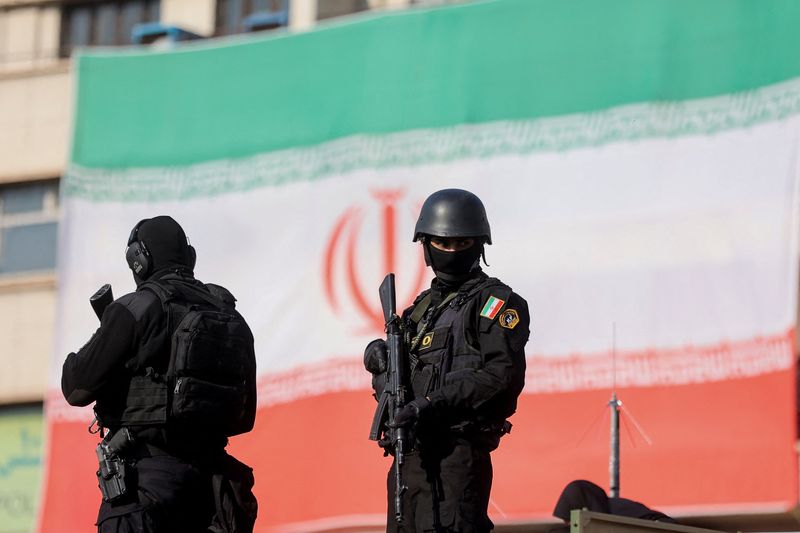
Iran said on Monday that it is keeping communication channels with Washington open as U.S. President Donald Trump considers how to respond to Tehran’s violent crackdown on nationwide protests, one of the most serious challenges to clerical rule since the 1979 Islamic Revolution.
Escalating tensions further, Trump announced late Monday that any country doing business with Iran—a major oil producer—would face a new 25% tariff on its exports to the United States.
“This order is final and conclusive,” Trump said in a social media post, without specifying the legal authority under which the tariffs would be imposed or clarifying whether they would apply to all of Iran’s trading partners. The White House did not issue an immediate response to requests for clarification.
Iran’s mission to the United Nations in New York declined to comment on the tariff announcement. Iran, already subject to extensive U.S. sanctions, exports most of its oil to China, with Turkey, Iraq, the United Arab Emirates, and India also among its key trading partners.
China’s embassy in Washington criticized Trump’s approach, saying Beijing would take “all necessary measures” to protect its interests and opposing what it described as illegal unilateral sanctions and extraterritorial enforcement.
Trump has warned Iran’s leadership that the United States would launch an attack if security forces continue firing on protesters. On Sunday, he said the U.S. might meet Iranian officials and confirmed he has been in contact with Iran’s opposition.
Iranian authorities, whose regional influence has diminished significantly, are facing widespread demonstrations that began as protests over severe economic hardship and evolved into direct calls for the overthrow of the deeply entrenched clerical establishment.
A U.S.-based human rights group said by late Monday it had verified the deaths of 646 people, including 505 protesters, 113 members of the military and security forces, and seven bystanders, and was investigating reports of an additional 579 deaths.
The group said that since the protests began on December 28, at least 10,721 people have been arrested. These figures could not be independently verified.
The organization also reported receiving videos and eyewitness accounts from Tehran’s Behesht Zahra Cemetery, where relatives of those killed gathered at gravesites and chanted anti-government slogans.
While military airstrikes remain one of several options available to Trump, U.S. officials stressed that diplomacy remains the preferred approach.
“Diplomacy is always the first option for the president,” the White House press secretary said on Monday. She added that public statements from Iranian officials differ sharply from messages being received privately by the U.S. administration, and that Trump wants to explore those private communications further.
Iranian Foreign Minister Abbas Araqchi said Tehran was reviewing ideas put forward by Washington, although he described them as incompatible with U.S. threats.
“Communications between U.S. special envoy Steve Witkoff and me continued before and after the protests and are still ongoing,” Araqchi said.
The U.S. State Department warned of escalating unrest and advised U.S. citizens in Iran to consider leaving the country by land via Armenia or Turkey, citing significant risks of questioning, arrest, and detention.
Families of Victims Reportedly Chant Protest Slogans
Iran has not released an official death toll from the protests. Authorities have blamed the violence on foreign interference and what they describe as terrorist groups backed by the United States and Israel. State-controlled media have focused largely on the deaths of security personnel.
Information flows from Iran have been severely restricted due to an internet blackout imposed since Thursday, though some citizens have reportedly maintained access through satellite-based services.
Iran’s Ministry of Intelligence said on Monday that it had detained what it described as “terrorist” teams accused of killing paramilitary volunteers loyal to the clerical establishment, setting fire to mosques, and attacking military facilities.
Speaking to a large crowd in Tehran’s Enqelab Square, parliament speaker Mohammad Baqer Qalibaf said Iran was fighting a war on four fronts: economic warfare, psychological warfare, military confrontation with the United States and Israel, and what he described as a war against terrorism.
Declaring the situation “under total control,” Araqchi said that since the protests began, 53 mosques and 180 ambulances had been set on fire.
Despite the scale of the unrest, there have been no visible signs of fractures within the Shi’ite clerical leadership, the military, or security forces. Protesters also lack a unified leadership structure, and opposition groups remain fragmented.
Trump said on Sunday that Iran had requested negotiations over its disputed nuclear program. The United States and Israel carried out airstrikes on Iranian nuclear facilities during a 12-day conflict in June.
“A meeting is being arranged, but we may have to act because of what is happening before that meeting,” Trump told reporters aboard Air Force One.
U.S. Options May Include Cyber and Military Action
Trump was scheduled to meet senior advisers on Tuesday to discuss potential responses to Iran, including options such as military strikes, cyber operations, expanded sanctions, and providing online support to anti-government groups.
Any military action would carry significant risks, as some Iranian military installations are located in densely populated areas.
In a U.S. television interview, Reza Pahlavi—the son of Iran’s last shah who lives in exile—urged Trump to intervene sooner rather than later.
“I think the president has to make a decision fairly soon,” said Pahlavi, who has encouraged protests and positioned himself as a possible transitional leader for Iran.
Qalibaf warned Washington against what he called a dangerous miscalculation.
“In the event of an attack on Iran, the occupied territories, as well as all U.S. bases and naval vessels, would be legitimate targets,” he said.
Iran remains weakened by last year’s conflict, and its regional influence has suffered further setbacks following blows to allied groups, including Lebanon’s Hezbollah, since the October 7, 2023, attack on Israel. Israeli forces also killed senior Iranian military commanders during the June conflict.
Global oil prices rose to seven-week highs on Monday amid fears that political instability and potential U.S. action could disrupt Iranian oil exports.
The protests initially erupted in response to soaring prices that worsened everyday living conditions, before evolving into broader opposition to the clerical rulers who have governed Iran for more than 45 years.
Public resentment has increasingly focused on the powerful Revolutionary Guards, whose extensive business interests—spanning oil and gas, construction, and telecommunications—are valued in the billions of dollars.